
Home Gallery Artists Collection About Us Contact
Button24
Button52
Button53
Button54
Button55
Button56
Button57
Button58
Button1
Button17
Button2
Button28
Button30
Button20
Button15
Button3
Button12
Button59
Button50
Button18
Button14
A B O U T  U S
 
Better World Studios


Our Story

History
In 1996, Carolyn Wilson, (Director of Better World Arts), created a joint venture between Better World Arts (then known as B W Trading) and Kaltjiti Arts, one of the art centres in the isolated Anangu Pitjantjatjara Yankunytjatjara Lands (APY Lands) in the remote north west corner of South Australia.

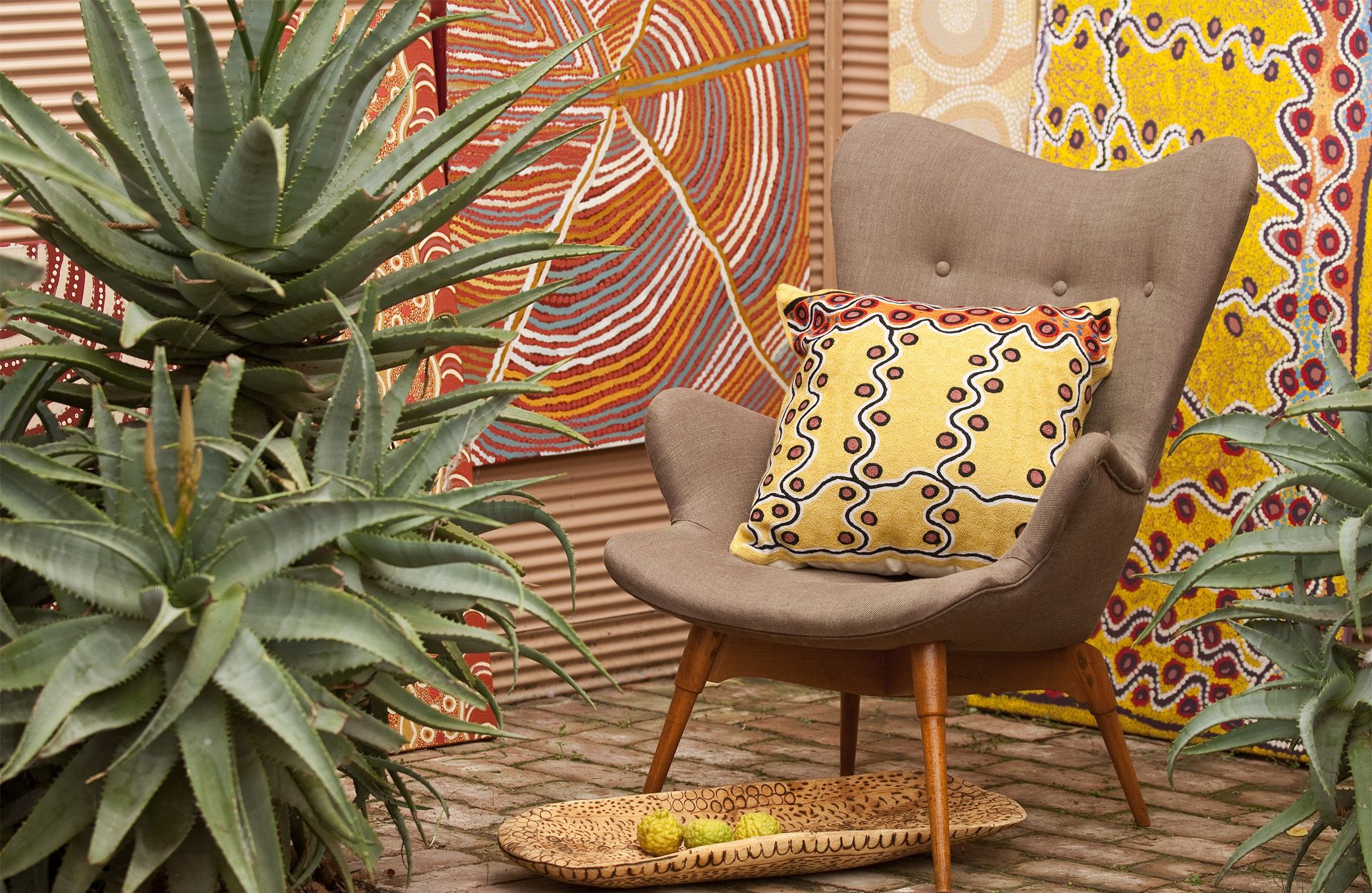
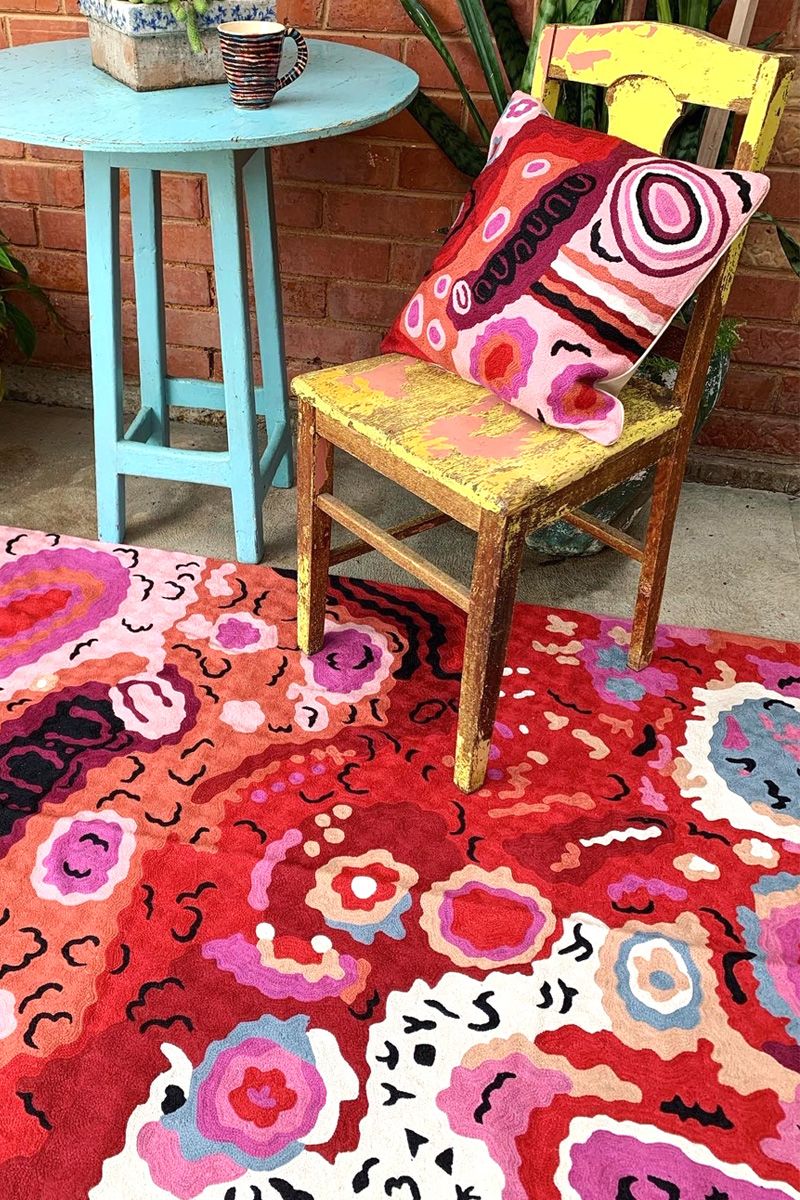
B W Trading had been importing handicrafts from the Kashmir region since 1991. Having a strong interest in world arts and crafts, and constantly seeing the commonalities between people and artists across the world, Carolyn saw the potential for combining the original art works from traditional Australian Aboriginal artists with the fine quality handicrafts from the remote Himalayan region of Kashmir.  Focusing on fine art instead of predictable commercialised Aboriginal images, a cross-cultural collaboration was born using the powerful images from the traditional artists of the A PY Lands and the cultural craft heritage of the Kashmir region.

Awards

We have recently had articles in QANTAS magazine, VOGUE LIVING Australia and Interior Design magazine from New York.

2008 We are finalists in the Telstra Business Awards in the categories of Micro-Business Award and Social Responsibility Award.

2007 Better World Arts has been shortlisted for a Ruby Award (SA) in the Leadership in Arts Enterprise category.

In 2005 B W Trading and Kaltjiti Arts won a Judges Encouragement Award (South Australian section) in the Prime Minister's Excellence in Community and Business Partnerships.  An encouragement award was given in place of the actual award because the project was deemed too commercial to fit the Awards criteria.  At Better World Arts we were very pleased with this result, including the recognition of the commercial success of the venture.  We believe commercial success is fundamental to the independence of Aboriginal artists, and it is definitely fundamental to the continuation of the project.

In 2003 Kaltjiti Arts won the Upper Spencer Gulf Exporters Award in the Community Contribution section for their participation in the Cross Cultural Project.

The project has become so successful that it is growing to encompass other art centres. Tjala Arts in Amata (also on the APY Lands), already recognized for the quality art work produced in the art centre, has been the first new member of the project. The growth potential of the project is assured by broader participation, as is the sustainability of the project into the future. The expansion will also allow the first participants at Kaltjiti Arts to have greater financial gain.

Business Model
The project focuses on creating an empowering business model for the artists. Instead of using the usual licensing models, the artists commission the production of their images onto products owned by themselves, through their art centres. As well as the usual royalties a healthy and independent sustainable business is now owned by the artists.  We have been referred to as "The Body Shop of Aboriginal Art in Australia".

Licensing
This model differs from licensing, where a third party owns the products sold and pays royalties to the artists. Licensing can create a passive income stream for artists. With the Better World Arts model the artists are paid royalties, so get the same benefit as with a licensed agreement, and also own a business which has a healthy and identified cash flow. As the products are owned by their art centres, and therefore themselves, licensing agreements are not necessary.

New Projects
Better World Arts is currently working on the development of another collaboration with artisans from Peru using traditional Inca jewellery techniques. This project is in it’s infancy, but it is anticipated that it will be just as successful as the Kashmiri project and bring as many benefits to the Peruvian artisans and the Aboriginal artists, as the current project brings to the participants.

Peru
We have recently received our first samples of silver and ceramic jewellery from our partners in Peru.  These sample pieces are now displayed on our web site.  These are the first pieces we have ordered,  many more designs will be introduced as we develop the project.   There are three artisans working on our orders,  they include Diego Carbajal, a young Peruvian man, passionate about his work.  He has studied sculpture, graphic design, photography and jewellery.  Diego uses the ancestral techniques of Peruvian silversmiths and has reached a high level in the application of his craft.  He is a young and highly talented artist.  Daniel Vilchez is also a talented young artist who studied Sound Engineering.  Daniel has developed a lince of earrings and broaches using computer chips and circuits and is expert in the work with German Nickel.  Dina Paucar is a recognised and popular artisan from Pisac in Cuzco, a town which has famously preserved the customs of their Inca ancestors.  Dina's family are experts in the work of clay and ceramics and their painting on ceramics.

About Our Logo
Better World Arts purchased the right to develop and use the logo from a painting by Anyupa Treacle. Anyupa is an artist from Kaltjiti Arts in Fregon.  The logo was derived from Anyupa’s painting which has been one of the most successful images used in the Cross Cultural Project. It is a traditional creation story about the ‘Seven Sisters'. This story is about seven sisters who ran away from a man called Nyiru, eventually fleeing to the skies to become the Pleiades, while Wati Nyiru resides in the constellation of Orion.


Benefits
The Cross Cultural Projects give substantial benefits to the participants. The goods sold give a steady income to the Aboriginal artists and the Kashmiri artisans who are contributors to the Project. This income is derived from work that is culturally enhancing, giving strength to traditional ways of life and creativity in both communities.
Artists who do not regularly sell art work but have produced vital images can participate. The project is inclusive and spreads the income across a broad range of people. There are currently more than 45 artists participating in the project from the Ananagu Pitjantjatjara Yankunytjatjara Lands. There are more than 60 Kashmiri artisans involved in producing the rugs and 25 working with the paper mache.

Artists Words
The success of the rugs and other products has elevated the skills of the artists as well. Below is what Inawinytji Williamson, (founding member and current Director of Ananguku Arts and Culture Aboriginal Corporation) said recently about how the project has worked for the artists.

In 1996-97 when Sonja Mc Lean was working at the art centre with us, we started doing the Cross Cultural Project with Carolyn. The first rugs to be made were designed by four artists, Audrey Miller, Katie Curley, Nukana Norris and Kanginy George. When these first rugs arrived in Fregon we thought they were really interesting, we liked the way they were made, and we liked the way they copied our paintings.

"Now there are more than 45 different artists working with the project, and over 110 different designs.

"All of the artists at Kaltjiti Arts want our designs put onto the rugs. We like them because of the money they bring to us and our families, but it also makes us happy to see our work done in this way, and more people get to see our art because of the rugs. Every time someone buys our rugs they are learning and understanding something about our culture. This also makes us happy.

"We artists have also learned to do better paintings since we started doing this project. When we first started we were doing small walka paintings on cards. Now we paint large paintings on canvas, our work is much better. The rugs made us feel like painting more. The artists at Kaltjiti Arts now paint in a lot of different ways - different to before. We paint our country “Ngura” a lot, we paint landscapes, we paint inma and Tjukupa. We all have different styles now. We have learnt a lot over these years.
More painting means that our culture is getting stronger. Our children come from school into the art centre to paint with us now. We are passing our culture to our children and our children’s children, when we get old and pass away they can take over.

"We hope this project will continue for a long time to come.”                                                            Inawinytji Williamson, SICAD Conference, Adelaide, August 2006.


Kashmiri Cultural Heritage
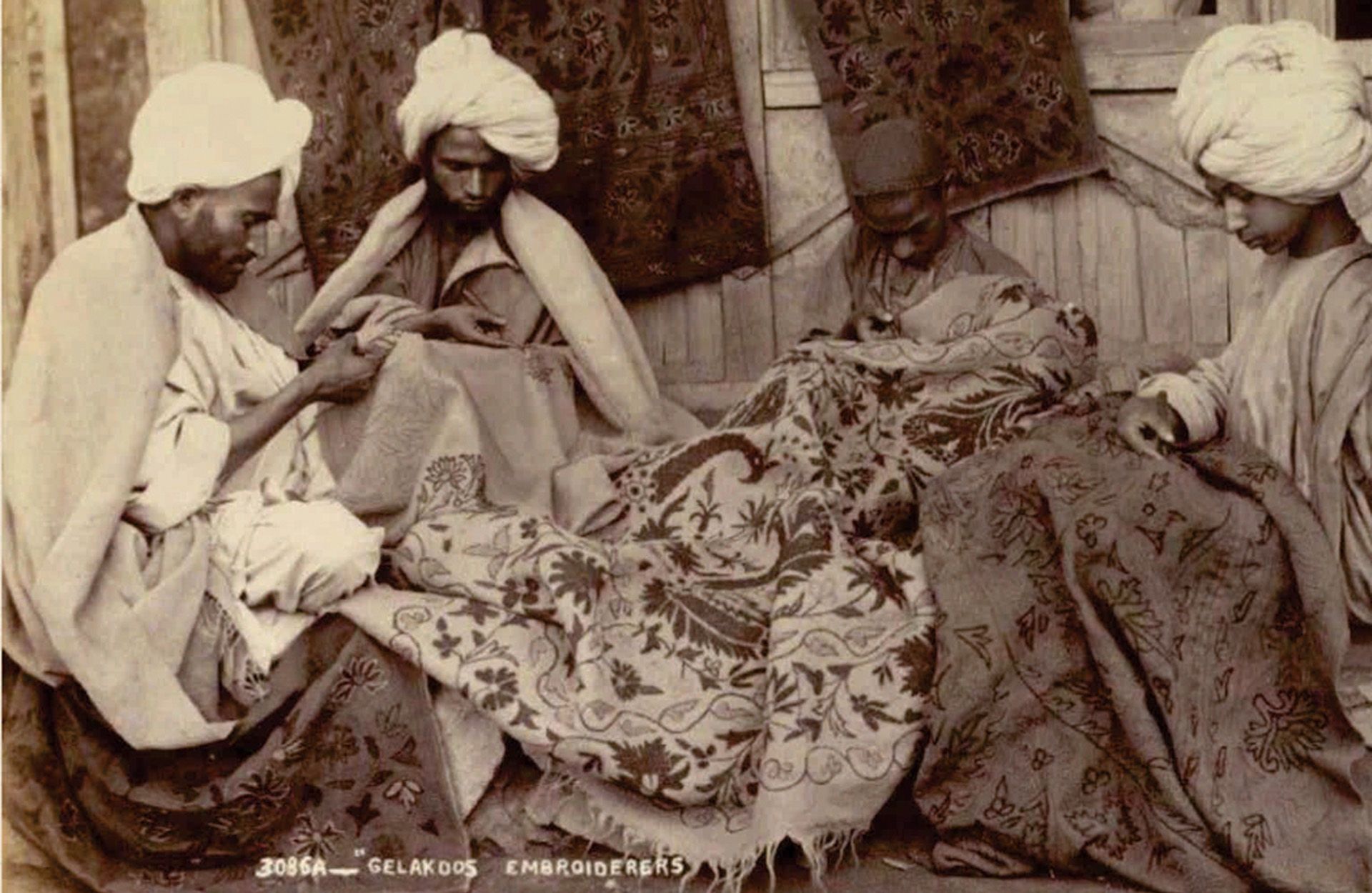
Kashmiri traditional crafts have also found a market that would not otherwise exist. The techniques used are unique to Kashmir, and are legacies of the regional history. Kashmir is a Himalayan province placed between Pakistan, Afghanistan and China, Tibet and India. Kashmir has a rich cultural heritage and is on the ancient silk road. The chain stitched rugs are unique to the Kahmiri region. Hand knotted rug making found its way into Kashmir from Persia and the lacquer ware was learnt from neighboring China. Recently Better World Arts has started ordering hand knotted rugs and were surprised to find out that this tradition has been in sharp decline in the Kashmir region, lost in a world of mass production. These skills once lost to the culture are unlikely to be regained. Designs to be hand knotted are first translated by skilled people who write the “language” for the design. This is something only a few people can do, and it is a language only the specially trained can read. Our ordering of hand knotted rugs has bought back into work old looms that were sitting un-used, and regenerated traditional skills.
Better World Arts trades with a family owned business in Srinagar, Kashmir. They are active community members and pay a monthly sum to the Indian Chamber of Commerce to help fund the fight against bonded child labour. Senior members of the family went personally to the earthquake devastated areas in Kashmir last year to assist in the rescue effort, giving their time, labour and money to this cause. They have also been active in supporting families who have been left without an income due to the political unrest in the region.

Better World Studios

Artists from the APY Lands who reside in or visit Adelaide often expressed that they would like the a facility similar in function to the art centres on the Lands.  Better World Arts bought this to the attention of Ku Arts, the government funded umbrella organisation associated with the Lands art centres.  Ku Arts was in favour of creating such an Adelaide based centre, so together  Ku Arts and Better World Arts initiated work space and materials for the artists to use. 

It soon became apparent that the issues in the city are different to those faced in the homeland communities.  It also evolved that Ku Arts did not have the resources to devote to the Adelaide based centre, and via an evolutionary process, Better World Arts created a studio space for artists to use when they are in town.  Uniting Care Wesley in Port Adelaide have been extremely supportive in this process, creating a partnership of which we are very proud.  Better World Arts has rented more space, which is now used as a gallery and studio space.  We supply the artists with canvas, paint and necessary materials, and work on the same model as government funded art centres. This is quite challenging as it is a resource hungry process.  The rewards are becoming  clear though.  The quality of the art work is improving, and some artists are now receiving very regular payments for their paintings. 

Better World Arts has a solid exhibition program set out, both in our own gallery, and in other galleries interstate.  The work is being marketed and sold with the professional and economic development being the central focus.  

A substantial outreach program  has also developed around the Studio.  Many of the artists are in Adelaide due to health or family reasons.  They encounter a number of difficulties and Better World has set up processes and networks that assist artists with these issues.  The regular professional development workshops run at the studios provide a forum for community services to engage with Anangu and their families,   regular social interaction is a very valuable by product and the healthy lunch provided adds to the fun and to the benefits of the sessions.

The majority of original art works now on the site are derived from the Better World Studios.